
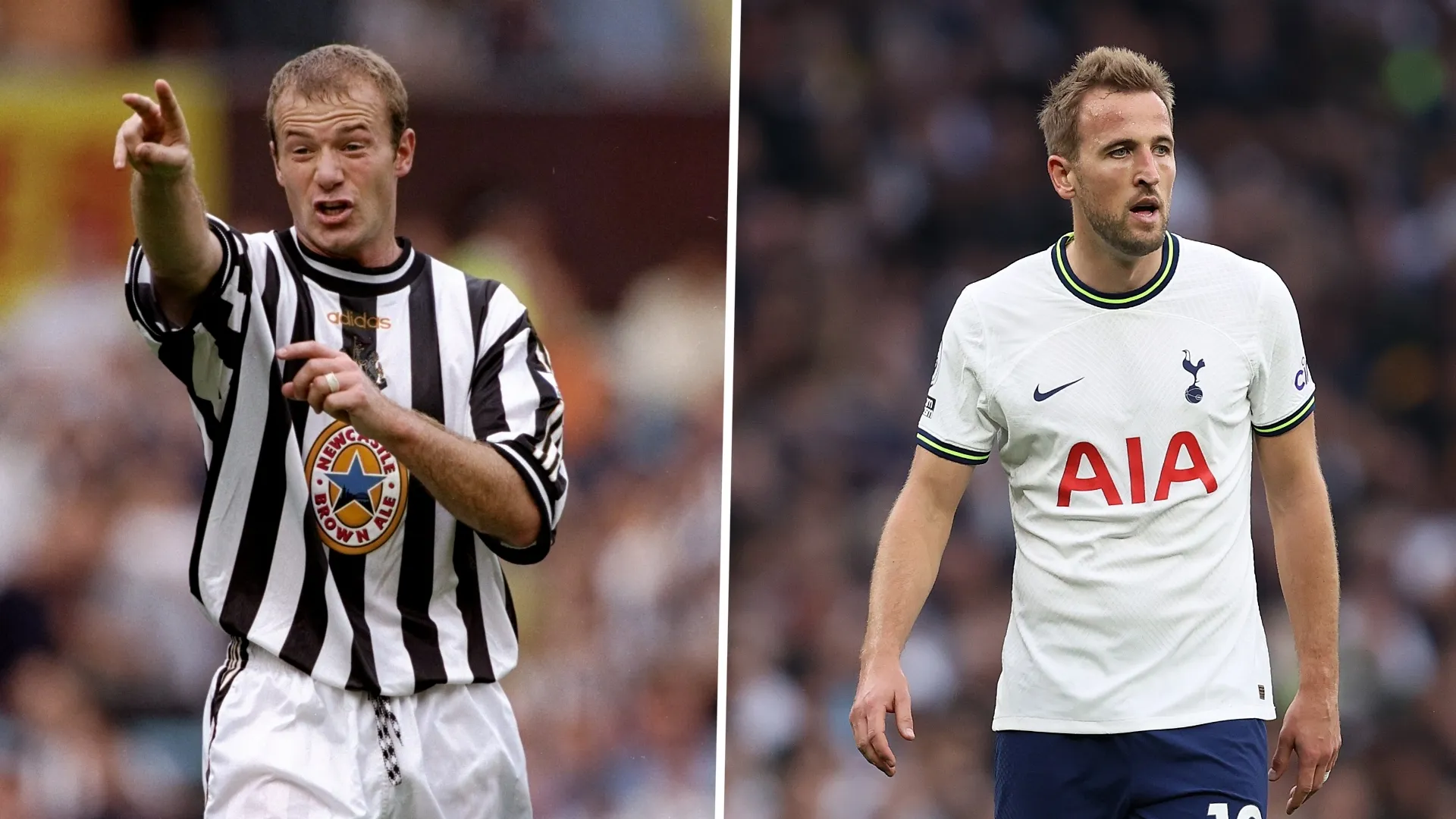
Alan Shearer’s 260th Premier League goal arrived in the final season of his career. It was his last one, too. When the Newcastle striker stopped scoring in 2006, the number looked enormous: a total built across Blackburn Rovers and Newcastle United, through changing managers, changing tactics and the weekly punishment of English football.
It has stayed at the top ever since. Harry Kane is 47 goals behind, which sounds close only until you remember how difficult it is to score 47 times at Premier League level. Wayne Rooney came nearer than most and still finished 52 short. Now a Norwegian is climbing faster than anyone in the competition’s history.
The list is more than a ranking of famous strikers. It tells us about longevity, peak level, penalties, injuries, positions and the quality of the teams behind each scorer. It also raises a proper question: does Shearer’s record survive the decade?
The answer sits alongside the full top 20, the 100-goal club, the goals-per-game debate and Erling Haaland’s extraordinary start.
The All-Time Top 20 at a Glance
| Rank | Player | Club(s) | Goals | Appearances |
|---|---|---|---|---|
| 1 | Alan Shearer | Blackburn Rovers, Newcastle United | 260 | 441 |
| 2 | Harry Kane | Tottenham Hotspur | 213 | 320 |
| 3 | Wayne Rooney | Everton, Manchester United | 208 | 491 |
| 4 | Mohamed Salah | Chelsea, Liverpool | 193 | 328 |
| 5 | Andy Cole | Newcastle United, Manchester United, Blackburn Rovers, Fulham, Manchester City, Portsmouth, Sunderland | 187 | 414 |
| 6 | Sergio Agüero | Manchester City | 184 | 275 |
| 7 | Frank Lampard | West Ham United, Chelsea, Manchester City | 177 | 609 |
| 8 | Thierry Henry | Arsenal | 175 | 258 |
| 9 | Robbie Fowler | Liverpool, Leeds United, Manchester City | 163 | 379 |
| 10 | Jermain Defoe | West Ham United, Tottenham Hotspur, Portsmouth, Sunderland, Bournemouth | 162 | 496 |
| 11 | Michael Owen | Liverpool, Newcastle United, Manchester United, Stoke City | 150 | 326 |
| 12 | Les Ferdinand | Queens Park Rangers, Newcastle United, Tottenham Hotspur, West Ham United, Leicester City, Bolton Wanderers, Reading | 149 | 349 |
| 13 | Teddy Sheringham | Nottingham Forest, Tottenham Hotspur, Manchester United, Portsmouth, West Ham United | 146 | 418 |
| 14 | Jamie Vardy | Leicester City | 145 | 342 |
| 15 | Robin van Persie | Arsenal, Manchester United | 144 | 280 |
| 16 | Son Heung-min | Tottenham Hotspur | 127 | 333 |
| 17 | Jimmy Floyd Hasselbaink | Leeds United, Chelsea, Middlesbrough, Charlton Athletic | 127 | 288 |
| 18 | Robbie Keane | Coventry City, Leeds United, Tottenham Hotspur, Liverpool, West Ham United, Aston Villa | 126 | 349 |
| 19 | Nicolas Anelka | Arsenal, Liverpool, Manchester City, Bolton Wanderers, Chelsea, West Bromwich Albion | 125 | 364 |
| 20 | Raheem Sterling | Liverpool, Manchester City, Chelsea, Arsenal | 123 | 396 |
How to read the table
The ranking uses Premier League goals only. It does not include goals scored in the old First Division, domestic cups, European competitions or international football.
The appearance figures are now filled from the verified records supplied for every player in this top 20. The table is intended as a quick snapshot rather than a full statistical breakdown.
Why the gap between first and twentieth is so big
Sterling’s 123 goals are enough for twentieth place. Shearer’s 260 are more than double that total.
That gap shows how unusual the record is. Most great forwards have a peak, a move, an injury spell or a gradual decline. Shearer combined elite finishing with a long career and an almost relentless appetite for shots.
Alan Shearer, 260 Goals: The Record Nobody Has Caught

The number, and how he built it
Shearer scored 112 Premier League goals for Blackburn Rovers and 148 for Newcastle United. He won the title with Blackburn in 1994/95, but the Newcastle years made him a national reference point.
He was not a player who needed elaborate conditions. Give him a cross and he attacked it. Give him a penalty and he usually buried it. Put him 20 yards out and the shot was often already on its way before the defender had settled.
The Premier League’s official player record lists 260 goals from 441 appearances. His record has stood since he retired in 2006, which means it has now survived two full decades of the modern game.
Why 260 has survived two decades
Modern football produces more attacking players, more transitions and more high-scoring seasons. Erling Haaland’s 36-goal debut campaign remains the record for most Premier League goals in a season.
Yet one brilliant season cannot match 14 years of production. Shearer’s record is a mountain built from hundreds of smaller climbs.
Shearer’s record in context
The best argument for Shearer is not simply that he scored the most. It is that he did so without the benefit of a late-career move to a dominant modern super-club.
He led the line, took responsibility and remained the main goal threat. In a debate about the greatest Premier League attackers, that combination gives him the strongest statistical case.
Harry Kane, 213: The Best Modern Claim
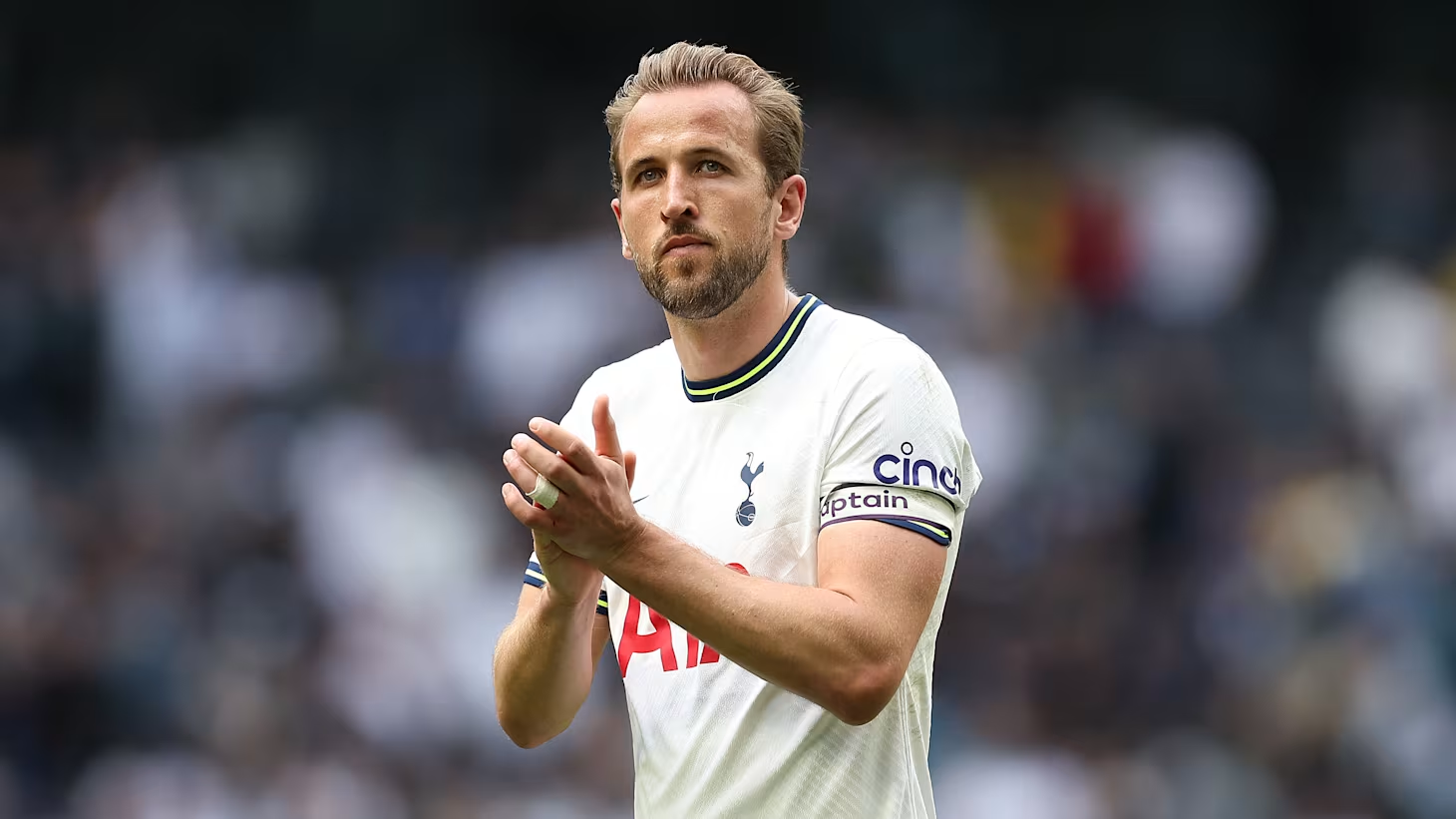
Closing in on a record that once looked safe
Kane is second with 213 goals and remains the only player close enough to make the Shearer conversation feel real.
He is also an unusual challenger. Kane could drop into midfield, play the final pass and still arrive in the box to finish the move. His total was not built solely on tap-ins or penalties. He scored through power, movement and a shooting technique that made difficult chances look routine.
Does he get there, and does it matter?
Kane has never won a Premier League title, which makes his 213 goals even more striking. His record belongs to an individual rather than a trophy-filled team story.
Could he have caught Shearer by staying in England? Possibly. But that is counterfactual territory. The important point is simpler: Kane’s 213 is the strongest finished modern total, and it may remain second for a very long time.
Wayne Rooney, 208: The Wrecking Ball
A teenager who never slowed down
Rooney scored 208 goals in 491 appearances and won five Premier League titles. He began as an explosive teenager, matured into a devastating forward and later adapted his game as his pace declined.
His goals came from everywhere. He could strike from outside the box, finish with either foot, attack crosses and create space for team-mates. Rooney was not a specialist. He was a footballer who happened to be dangerous in every attacking position.
Why he is often underrated
Rooney’s versatility slightly hurts him in scoring debates. He spent periods helping others score, playing wide or operating behind a main striker.
That makes his 208 more impressive, not less. He was often asked to be the engine of the attack and the finish at the end of it.
Mohamed Salah, 193: The Winger Who Broke the Logic

The most prolific wide forward
Salah reached 193 Premier League goals for Chelsea and Liverpool in 328 appearances. His final Anfield appearance came on 24 May 2026, after he had won two league titles with Liverpool.
He scored by running beyond the defence, cutting inside onto his left foot and arriving at the far post. Defenders knew the pattern. They still struggled to stop it.
For a wider discussion of his standing, Metro Football’s Liverpool greats ranking places his longevity and output in the proper club context.
Why 193 from the wing changes the conversation
Salah’s total matters because he was not a traditional number nine. He carried a large share of the scoring burden while starting from the flank.
That is why his 193 feels closer to Henry’s 175 than a normal position comparison would suggest. Both players stretched the idea of what a wide attacker could contribute.
His final tally and where it leaves him
Salah finishes fourth, ahead of Andy Cole and Sergio Agüero. He is also the highest-placed player on this list whose Premier League career has already finished. His total is closed. Haaland's is not.
Table 2: Every Player With 100+ Premier League Goals, The Full Top 20
| Rank | Player | Goals | Appearances | Goals per game | Years active |
|---|---|---|---|---|---|
| 1 | Alan Shearer | 260 | 441 | 0.59 | 1992/93–2005/06 |
| 2 | Harry Kane | 213 | 320 | 0.67 | 2012/13–2022/23 |
| 3 | Wayne Rooney | 208 | 491 | 0.42 | 2002/03–2017/18 |
| 4 | Mohamed Salah | 193 | 328 | 0.59 | 2013/14–2025/26 |
| 5 | Andy Cole | 187 | 414 | 0.45 | 1993/94–2007/08 |
| 6 | Sergio Agüero | 184 | 275 | 0.67 | 2011/12–2020/21 |
| 7 | Frank Lampard | 177 | 609 | 0.29 | 1995/96–2014/15 |
| 8 | Thierry Henry | 175 | 258 | 0.68 | 1999/00–2011/12 |
| 9 | Robbie Fowler | 163 | 379 | 0.43 | 1993/94–2007/08 |
| 10 | Jermain Defoe | 162 | 496 | 0.33 | 2001/02–2019/20 |
| 11 | Michael Owen | 150 | 326 | 0.46 | 1996/97–2012/13 |
| 12 | Les Ferdinand | 149 | 349 | 0.43 | 1995/96–2011/12 |
| 13 | Teddy Sheringham | 146 | 418 | 0.35 | 1992/93–2006/07 |
| 14 | Jamie Vardy | 145 | 342 | 0.42 | 2014/15–2024/25 |
| 15 | Robin van Persie | 144 | 280 | 0.51 | 2004/05–2014/15 |
| 16 | Son Heung-min | 127 | 333 | 0.38 | 2015/16–2024/25 |
| 17 | Jimmy Floyd Hasselbaink | 127 | 288 | 0.44 | 1997/98–2007/08 |
| 18 | Robbie Keane | 126 | 349 | 0.36 | 1997/98–2011/12 |
| 19 | Nicolas Anelka | 125 | 364 | 0.34 | 1996/97–2014/15 |
| 20 | Raheem Sterling | 123 | 396 | 0.31 | 2012/13–2025/26 |
What the second table shows
The raw-goals list rewards players who stayed fit, played regularly and remained in the league for years. The goals-per-game column tells a different story.
Henry’s 0.68 is higher than Shearer’s 0.59. That does not make Henry the all-time top scorer, but it does strengthen the case that he was the more efficient finisher at his peak.
Where the ties come from
Son Heung-min and Hasselbaink are level on 127 goals. The ranking gives both players the same position.
The same principle applies throughout historical lists: equal totals should remain equal unless a clearly defined secondary measure is being used.
Andy Cole, Sergio Agüero and the 180 Club
Cole’s 187 and the one-penalty detail
Andy Cole scored 187 Premier League goals, with only one coming from a penalty. That detail changes the feel of his total.
Cole was a ruthless penalty-box striker, but he was not padding the record from 12 yards. He scored through movement, rebounds, first-time finishes and the kind of near-post runs that centre-backs hate.
Agüero’s 184 and the best minutes-per-goal case
Agüero scored 184 goals in 275 appearances and won five league titles with Manchester City. His goals-per-game ratio was roughly 0.67, among the best of anyone to pass 100 goals.
He was smaller than many classic Premier League strikers, yet his balance and acceleration made him almost impossible to handle inside the box. His 184 is a brilliant blend of peak quality and sustained output.
Frank Lampard and Thierry Henry: The Midfielder and the Master
Lampard’s 177, the highest by a midfielder

Lampard scored 177 goals in 609 appearances. That is the highest Premier League total by a midfielder.
His late runs became a Chelsea attacking weapon. Lampard was often arriving rather than waiting, which made him difficult to track. He turned midfield positioning into a scoring advantage.
The wider debate around his role sits naturally alongside other elite midfielders in Metro Football’s Premier League midfielders ranking.
Henry’s 175 in 258 appearances
Henry’s 175 goals came in only 258 appearances. He won two Premier League titles with Arsenal and was part of the unbeaten 2003/04 team.
His combination of pace, control and finishing created a player who could beat a defender and still have time to choose the corner.
Why Henry’s ratio is the real argument
The calculation is straightforward:
- 175 goals ÷ 258 appearances = 0.678
- Rounded to two decimal places, that is 0.68 goals per game
Henry’s ratio is the best among players with at least 100 Premier League goals.
That does not erase Shearer’s longevity. It does show that Henry produced goals at a remarkable rate. His place in Arsenal history is explored further in Metro Football’s best Arsenal players article.
Robbie Fowler, Jermain Defoe and Michael Owen
Fowler’s 163 and the wasted years
Fowler reached 163 goals, placing him ninth. His early Liverpool years were electric, with quick feet and a finish that seemed to arrive before the chance had fully formed.
Injuries and transfers interrupted his momentum. That is the frustrating part of Fowler’s career: the total is outstanding, yet it still feels as if there should have been more.
Defoe’s 162 and pure longevity
Defoe scored 162 goals through persistence as much as brilliance. He remained useful across different teams, managers and tactical systems.
He was one of the league’s best finishers from tight angles and one of its most reliable substitutes. His career kept producing goals long after many forwards had disappeared from the conversation.
Owen’s 150 and the injury question
Owen reached 150 goals despite injuries affecting the later shape of his career. His early burst, especially at Liverpool, made him one of the most feared finishers in Europe.
The question is not whether Owen was good enough for a higher place. He clearly was. The question is how many more goals his pace could have produced without those interruptions.
The Rest of the Top 20
Ferdinand, Sheringham and Vardy
Les Ferdinand scored 149 goals without a penalty, the highest total achieved without scoring from the spot. Teddy Sheringham reached 146 and remains the oldest player to score in the Premier League, doing so at 40 years and 268 days.
Jamie Vardy’s 145 carries a different kind of story. He came from non-league football and won the Premier League with Leicester City in 2015/16. He is the only player to win the competition after playing in the eighth tier.
Van Persie, Son, Hasselbaink and Keane
Robin van Persie’s 144 goals came with a mixture of technique and timing. He could finish first time, bend a shot into the far corner or attack a cross with perfect balance.
Son, Hasselbaink and Robbie Keane all reached the 120s. Their styles were different, but each could lead an attack rather than simply support it.
Anelka and Sterling
Nicolas Anelka scored 125 goals across a career shaped by movement between major clubs. Raheem Sterling sits twentieth with 123.
Sterling’s total reflects his ability to appear in the right place repeatedly. His best years were built on speed, timing and arriving behind the last defender.
Goals Per Game, Who Was Actually the Best Finisher?
The calculation, shown in full
Goals per game is calculated by dividing total Premier League goals by appearances.
- Shearer: 260 ÷ 441 = 0.59
- Rooney: 208 ÷ 491 = 0.42
- Salah: 193 ÷ 328 = 0.59
- Cole: 187 ÷ 414 = 0.45
- Agüero: 184 ÷ 275 = 0.67
- Lampard: 177 ÷ 609 = 0.29
- Henry: 175 ÷ 258 = 0.68
- Haaland: 117 ÷ 137 = 0.85
Kane’s supplied ratio is roughly 0.67.
Why the ratio needs handling carefully
Goals per game rewards explosive careers and penalises players who stay long enough to decline. It also treats a one-minute substitute appearance like a full match, depending on the database.
That is why no single metric settles the debate. Raw totals measure durability. Ratios measure scoring frequency. Both matter.
Where Haaland sits in this argument
Haaland’s 117 goals in 137 appearances gives him an extraordinary 0.85 ratio. It is the most frightening number on the page, although his career is still developing.
A short career can flatter a ratio. Haaland has to maintain this level through injuries, tactical changes and the normal wear of a long career before we can place him beside Shearer or Henry with confidence.
The Premier League 100 Club
What it takes to get there
Thirty-five players have scored at least 100 Premier League goals as of September 2026.
That is a small club when you consider how many players have appeared in the competition since 1992. Reaching 100 requires talent, minutes, health and a role that consistently creates chances.
The names still climbing
Haaland has already reached 117 goals. Other notable totals include Dwight Yorke with 123, Romelu Lukaku with 121, Steven Gerrard with 120 and Ian Wright with 113.
Some of these players were strikers. Others were midfielders or wide forwards. The route to 100 has never been one-size-fits-all.
The Fastest to 100
Haaland’s 111 games
Haaland became the fastest player to reach 100 Premier League goals when he scored against Fulham on 2 December 2025. He needed only 111 matches.
That record is different from the all-time scoring record. It measures speed, not endurance. Haaland may eventually threaten Shearer, but he has already taken the early-career record.
Who held the record before him
The previous benchmark belonged to players who combined excellent scoring rates with regular starting roles. Haaland moved beyond them because his finishing has been unusually direct: fewer touches, bigger chances and an exceptional ability to attack space.
The record may be difficult to beat unless another striker arrives with a similar combination of physical power and early first-team opportunity.
Records Still Standing and Records Under Threat
The marks that look safe
Shearer’s 260 remains the obvious safe-looking record. Rooney’s 491 appearances and Lampard’s 609 also require a player to survive a very long Premier League career.
Henry’s 175 goals in 258 appearances may be harder to repeat stylistically, even if it is technically not the largest total.
The ones that could fall this decade
Haaland’s fastest-to-100 record is already his. His 117 goals also put him within range of several names above him.
Salah’s 193 is the next major target. If Haaland stays fit and remains in England, he could pass it before the decade ends. The much bigger question is whether he can keep scoring at anything like his current rate.
Could Anyone Reach 300 Goals?
The maths involved
Shearer needs 40 more goals to reach 300, but he retired in 2006. The target is therefore theoretical for him and practical only for an active player.
For Haaland, the calculation is more interesting. At 117 goals, he needs 183 more. Even at 30 goals per season, that would require more than six full campaigns.
Who is realistically capable
Haaland is the only obvious candidate from the supplied list. Kane has left the Premier League with 213, while Salah has finished on 193.
Reaching 300 would require elite scoring, a long stay in England and remarkably good availability. It is possible. It is not normal.
How the 2026/27 Season Changes This List
What to watch this campaign
Haaland’s position is the main live story. At 117 goals as of 20 September 2026, every productive month will move him closer to the players who once seemed unreachable.
The other question concerns the shape of the top 20. Retired or departed players create space for active scorers to climb, but only if those players can keep producing over several seasons.
The names who will move
Haaland will move. The exact pace depends on minutes, fitness and Manchester City’s attacking output.
For context, the Premier League winners list shows how much the competition has changed across different eras. Scoring records need that context because the number of matches, tactical trends and team strength all shape a player’s opportunities.
Final Thoughts
Alan Shearer remains the Premier League’s all-time top scorer because he combined everything the record demands: elite finishing, regular availability, a long career and the willingness to remain the main man. Henry may have been the more efficient scorer. Agüero may have been the sharper box predator. Haaland may become the most explosive of them all.
But the record belongs to Shearer.
Until someone scores 261, every argument about the Premier League’s greatest scorer starts with the same name.
Sources and Methodology
The official Premier League records were prioritised because this article concerns competition-specific totals. The Premier League’s Alan Shearer profile confirms his 441 appearances and 260 goals, while the league’s official records page provides historical records for scoring, appearances, milestones and individual seasons.
Additional context was checked against established football reporting, including ESPN’s Premier League scoring records coverage and the BBC Sport record of Premier League milestones. The supplied September 2026 figures were used for players whose current totals extend beyond the historical pages available through the research search.
The first table was built by ordering the supplied top 20 by Premier League goals. The second table repeats those rankings and adds verified appearances, goals-per-game figures and years active from the supplied data. A dash is used only where a verified figure has not been supplied for that field. It does not represent zero appearances, zero goals or an absence of a playing record.
There are limits to any historical comparison. Appearance totals can vary slightly between providers, particularly around substitute appearances and older match records. Goals-per-game ratios also flatter players with shorter careers because they do not measure longevity, decline or the difficulty of maintaining a high level over many seasons. Editorial judgement is therefore unavoidable when comparing different eras and positions.
Last checked: 29 September 2026. This list is updated after each completed Premier League season. For corrections or verified updates, contact Metro Football.
FAQs
Who has scored the most Premier League goals?
Alan Shearer is the all-time top scorer with 260 Premier League goals. He scored 112 for Blackburn Rovers and 148 for Newcastle United.
How many Premier League goals has Harry Kane scored?
Harry Kane has scored 213 Premier League goals. He is second on the all-time list and has never won the Premier League title.
Can Harry Kane break Alan Shearer’s record?
No. Kane has left the Premier League on 213 goals, 47 behind Shearer. He would need to return to England and score heavily to have any chance of passing 260.
Who has the best Premier League goals-per-game ratio?
Thierry Henry has the best goals-per-game ratio among players with at least 100 Premier League goals, at roughly 0.68. Erling Haaland’s current ratio is higher, at about 0.85, but his career is still developing.
How many players have scored 100 Premier League goals?
Thirty-five players have reached 100 Premier League goals as of September 2026.
Who was the fastest player to reach 100 Premier League goals?
Erling Haaland was the fastest. He reached 100 goals in 111 matches, scoring his milestone against Fulham on 2 December 2025.
Who has scored the most Premier League goals in a single season?
Erling Haaland holds the record with 36 goals for Manchester City in the 2022/23 season.
Has anyone scored 300 Premier League goals?
No player has reached 300 Premier League goals. Alan Shearer holds the record with 260, while Haaland is the most obvious active candidate to challenge the milestone.
Who is the highest-scoring Premier League midfielder?
Frank Lampard is the highest-scoring midfielder, with 177 Premier League goals.
Who scored the most Premier League goals without taking penalties?
Les Ferdinand scored 149 Premier League goals without scoring a penalty. Andy Cole also scored 187 goals with only one penalty among them.