
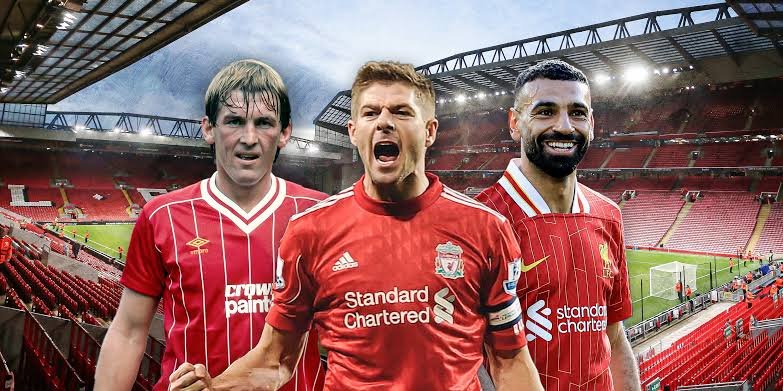
Trying to cut Liverpool’s history down to 20 players is like trying to fit Anfield into a living room. You are always leaving something huge outside. This is a club with 20 top-flight league titles, six European Cups and more than a century of history, so even the names left out would be enough for some clubs to build statues around.
That is what makes a list like this so enjoyable and so risky. One supporter will start with Gerrard. Another will go straight to Dalglish or Rush. Someone else will make the case for Barnes on pure talent, or Salah on numbers and modern impact. Before long, it turns into the sort of debate Liverpool fans could carry through breakfast, the school run and the walk to the match.
This ranking mixes ability, influence, longevity and big-match moments, because greatness at Liverpool has never come in just one shape. So yes, this is an argument waiting to happen. It is meant to be. Read it, test it against your own favourites, and if you think we have got one wrong, you are probably exactly the kind of reader this piece was written for.
How This Ranking Works (and Why Anfield Arguments Never End)
What I counted
Ranking Liverpool’s greatest players is not simply a case of counting goals or medals. A striker can score more than a midfielder, while a goalkeeper may shape a golden era without appearing on the scoresheet. I have considered ability, influence, longevity, decisive moments, trophies and the strength of the era in which each player performed.
Liverpool’s scale matters here. The club has won 20 top-flight English titles and six European Cups or Champions Leagues, an English record in Europe. The best players did more than collect medals. They helped create the identity of the team around them.
The Liverpool 2026 Greatest poll used a similar mixture of ability, impact, legacy, success and statistical evidence. Around 1.4 million selections were submitted by fans, former players, journalists and a club panel. In July 2026, it named Steven Gerrard as Liverpool’s greatest ever player, with Kenny Dalglish second, Ian Rush third and John Barnes fifth. This editorial ranking broadly agrees with that verdict, while noting that the club has not published individual vote counts, and it remains an editorial ranking rather than an official club list.
What I deliberately left out
I have judged each player primarily on what they achieved in a Liverpool shirt. International honours matter, but they cannot decide the ranking. Otherwise, a player’s position would depend too heavily on the strength of the country they represented.
I have also avoided ranking managers, even when their contribution was enormous. Bill Shankly, Bob Paisley and Jürgen Klopp changed Liverpool forever, but this list is about players. Kenny Dalglish is included because his playing career alone would put him near the top, with his managerial achievements adding another layer to an already remarkable legacy.
Liverpool's Greatest Players at a Glance (Table 1)
| Rank | Player | Position | Liverpool years | Key stat |
|---|---|---|---|---|
| 1 | Steven Gerrard | Midfielder | 1998–2015 | 710 appearances, 186 goals |
| 2 | Kenny Dalglish | Forward | 1977–1990 | 172 goals in 515 appearances |
| 3 | Ian Rush | Forward | 1980–1996 | Club-record 346 goals |
| 4 | John Barnes | Winger | 1987–1997 | 108 goals in 407 appearances |
| 5 | Mohamed Salah | Forward | 2017–2026 | 257 goals in 442 appearances |
| 6 | Graeme Souness | Midfielder | 1978–1984 | Three European Cups |
| 7 | Billy Liddell | Winger | 1946–1960 | 228 goals in 534 appearances |
| 8 | Alan Hansen | Defender | 1977–1991 | Eight league titles |
| 9 | Ray Clemence | Goalkeeper | 1967–1981 | 323 clean sheets |
| 10 | Ian Callaghan | Midfielder | 1960–1978 | Club-record 857 appearances |
| 11 | Robbie Fowler | Forward | 1993–2001, 2006–2007 | 183 goals in 369 appearances |
| 12 | Roger Hunt | Forward | 1959–1969 | 285 goals |
| 13 | Luis Suárez | Forward | 2011–2014 | 82 goals in 133 appearances |
| 14 | Emlyn Hughes | Defender | 1967–1979 | Only Liverpool captain to lift the European Cup twice |
| 15 | Kevin Keegan | Forward | 1971–1977 | 100 goals in 323 appearances |
| 16 | Virgil van Dijk | Defender | 2018–present | Seven major trophies |
| 17 | Jamie Carragher | Defender | 1996–2013 | 737 appearances |
| 18 | Michael Owen | Forward | 1996–2004 | 158 goals in 297 appearances |
| 19 | Ian St John | Forward | 1961–1971 | 118 goals in 425 appearances |
| 20 | Gordon Hodgson | Forward | 1925–1936 | 241 goals in 377 appearances |
How to read the table
The ranking is deliberately built across different generations. Comparing players from the 1950s with players from the Premier League era is not perfectly scientific. The pace, tactics, pitches, schedules and financial landscape all changed.
That is why the key stat column includes different types of achievement. For Callaghan, appearances tell the story. For Rush and Hodgson, goals matter most. For Van Dijk, the transformation of Liverpool’s defence carries more weight than his scoring record.
Why the numbers only take you so far
Statistics tell us what happened. They do not always explain what a player felt like to watch. Barnes could make a defender look as though they were running on wet grass. Souness could make a midfield battle feel like a personal negotiation. Gerrard could change a match with one pass, one tackle or one long-range strike.
The best Liverpool players combined measurable success with a lasting emotional connection to the supporters.
1-4: The Immortals
Steven Gerrard: the captain who carried a club
Steven Gerrard takes first place because he represented Liverpool’s hopes and frustrations for almost two decades. He made 710 appearances, scored 186 goals and won nine major trophies between 1998 and 2015.
His greatest night came in Istanbul in 2005. Liverpool trailed AC Milan 3–0 in the Champions League final before Gerrard began the comeback. His header gave Liverpool belief, and the match eventually went to penalties. It was not a one-man victory, but Gerrard became the spark that brought the team back to life.
The numbers behind the legend
Gerrard won the UEFA Cup, two FA Cups, three League Cups and two UEFA Super Cups, as well as the Champions League. He also scored in major finals and delivered famous moments against West Ham, Chelsea and Everton.
He never won the Premier League with Liverpool. That omission is the strongest argument against placing him first. Yet his influence was so broad that reducing his career to one missing medal would feel like judging a lighthouse only by the ships it did not save.
Kenny Dalglish: the King
Kenny Dalglish is Liverpool royalty. He scored 172 goals in 515 appearances and won six league titles and three European Cups as a player. His touch, movement and passing made him the perfect attacking link between midfield and attack.
Dalglish’s value went beyond goals. He made difficult football look calm. He could receive the ball under pressure, turn away from trouble and find the right pass before defenders had time to react. His later success as player-manager and manager only strengthened his place in the club’s history.
Ian Rush: the record that still stands
Ian Rush remains Liverpool’s all-time record goalscorer with 346 goals in 660 appearances. That figure is not merely impressive; it is the mountain every future Liverpool striker must climb.
Rush’s partnership with Dalglish became one of the defining combinations of English football. He won five league titles, two European Cups and three FA Cups. His movement was sharp, his finishing was direct and his work rate gave defenders no quiet moments.
John Barnes: the most gifted player of his era
John Barnes brought elegance and power together. His famous run against Brazil at the Maracanã hinted at the ability Liverpool supporters would see regularly after his arrival from Watford.
Between 1987 and 1997, Barnes scored 108 goals in 407 appearances and won five major trophies. He was not simply a winger who stayed wide and crossed. He carried the ball through the centre, combined with teammates and struck the ball with remarkable authority.
5-8: European Royalty
Mohamed Salah: the Egyptian King
Mohamed Salah finished his Liverpool career with 257 goals in 442 appearances, making him the club’s third-highest goalscorer behind Rush and Roger Hunt. He left Liverpool at the end of the 2025/26 season after his contract was terminated a year early, with his final Anfield appearance coming against Brentford on 24 May 2026.
Salah’s 2024/25 season was extraordinary. He scored 29 league goals and provided 18 assists, producing 47 league goal involvements. He became the first player to win the Golden Boot, Playmaker award and Player of the Season award in the same campaign.
The Premier League’s player profile records the scale of his league contribution. Salah’s consistency is what separates him from many brilliant short-peak forwards.
Graeme Souness: the midfielder who ran games
Graeme Souness was Liverpool’s midfield general. He made 359 appearances and scored 55 goals between 1978 and 1984, winning three European Cups.
He played with aggression, but that description alone undersells him. Souness could tackle, pass, shoot and control the rhythm of a match. He gave Liverpool steel without sacrificing quality. When the game became frantic, he often looked like the only player who knew exactly where it was going.
Billy Liddell: the original Kop hero
Billy Liddell made 534 appearances and scored 228 goals between 1946 and 1960. He became such a central figure that Liverpool were often referred to as “Liddellpool”.
His importance stretched beyond statistics. Liddell carried the club through the post-war period and became a symbol of reliability. He could play on either wing, lead the attack and produce goals when Liverpool needed them.
Alan Hansen: the defender who played like a midfielder
Alan Hansen made 620 appearances and won eight league titles, three European Cups, two FA Cups and four League Cups.
His style was based on calmness rather than chaos. Hansen read danger early, used the ball intelligently and rarely appeared rushed. In an era of tough centre-forwards and physical defending, he showed that a defender could control matches through positioning and passing.
9-12: The Men Who Made the Machine
Ray Clemence: the safest hands at Anfield
Ray Clemence made 665 appearances and kept 323 clean sheets. He was the dependable final piece of Liverpool’s great 1970s side.
Goalkeepers are sometimes judged only by spectacular saves. Clemence’s real gift was trust. His defenders knew where he would be, how he would claim a cross and when he would stay calm. That reliability helped Liverpool build from the back before it became fashionable.
Ian Callaghan: the record that may never be broken
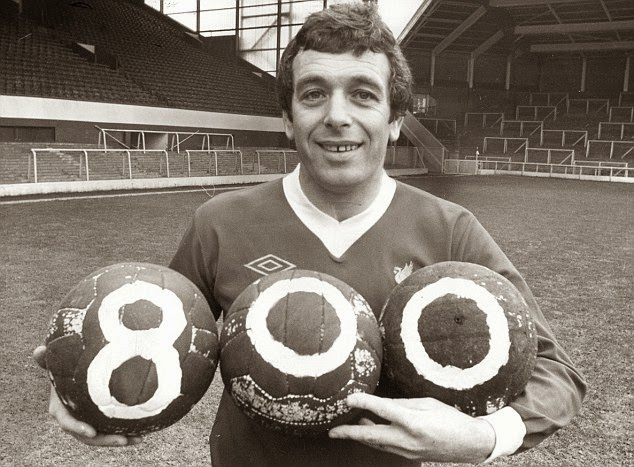
Ian Callaghan holds Liverpool’s appearance record with 857 matches between 1960 and 1978. He also made 640 league appearances and 79 FA Cup appearances, both club records.
Callaghan won five league titles, two European Cups and two FA Cups. His career bridges the transformation from Shankly’s rebuilding Liverpool to Paisley’s European powerhouse. Longevity is not always glamorous, but Callaghan made excellence look like a daily habit.
Robbie Fowler: the most natural finisher
Robbie Fowler scored 183 goals in 369 appearances across two spells. At his peak, he seemed to know where the ball would land before anyone else in the stadium.
Fowler’s finishing was quick and economical. He did not need a long run-up or a perfect angle. His left foot, instincts and calmness around the penalty area made him one of Liverpool’s most natural goalscorers.
Roger Hunt: the man Rush had to pass
Roger Hunt scored 285 goals in 492 appearances between 1959 and 1969. He held Liverpool’s goalscoring record before Rush overtook him.
Hunt was also part of England’s 1966 World Cup-winning team. For Liverpool, he was a relentless forward whose movement opened space for teammates. His record stood for decades because he combined consistency with an appetite for the biggest matches.
13-16: Genius, Grit and Graft
Luis Suárez: the best three years of the modern era
Luis Suárez scored 82 goals in 133 appearances between 2011 and 2014. His Liverpool peak was short, but it was spectacular.
Suárez played with imagination and edge. He could dribble in tight spaces, shoot from awkward angles and create chances from situations that appeared finished. His 2013/14 season remains one of the most explosive individual campaigns in Premier League history.
Emlyn Hughes: the captain who lifted it twice
Emlyn Hughes made 665 appearances as Liverpool captain. He won four league titles, two European Cups, one FA Cup and two UEFA Cups.
He remains the only Liverpool captain to lift the European Cup twice. Hughes combined energy with leadership and could operate in defence or midfield. He was the sort of captain who made a team feel larger than its individual parts.
Kevin Keegan: the winger who became a superstar
Kevin Keegan made 323 appearances and scored 100 goals. He won three First Division titles, two UEFA Cups, the FA Cup and the European Cup.
Keegan arrived with pace and directness, then grew into a complete forward. His movement made Liverpool dangerous in transition, while his personality helped him become one of the most recognisable footballers of his generation.
Virgil van Dijk: the defender who changed everything
Virgil van Dijk changed Liverpool’s defensive level almost immediately. He has made 274 Premier League appearances, won seven major trophies and served as club captain since July 2023.
His calmness gave Liverpool permission to defend higher up the pitch. His passing helped start attacks, while his strength and positioning reduced pressure on the rest of the team. He was a central figure in the Champions League and Premier League successes of the modern era.
17-20: Local Lads, Records and Royalty
Jamie Carragher: the quiet cornerstone
Jamie Carragher made 737 appearances for Liverpool. He was not the most naturally elegant defender, but he built his reputation on concentration, courage and commitment.
Carragher adapted across the back line and remained useful through several different Liverpool teams. His importance grew because he made the difficult parts of defending feel personal. He blocked shots, organised teammates and rarely stopped competing.
Michael Owen: the teenage sensation
Michael Owen scored 158 goals in 297 appearances. His acceleration made him almost impossible to defend when he attacked space behind the back line.
Owen won the Ballon d’Or while still a Liverpool player and became one of the most feared young forwards in Europe. Injuries later affected his career, but his Liverpool peak was sharp enough to secure a place among the club’s greatest.
Ian St John: the man who started the run
Ian St John scored 118 goals in 425 appearances and played a key role in the Liverpool side built by Bill Shankly.
He brought intelligence, movement and technical quality to the attack. His contribution helped Liverpool move from a strong second-tier club into a team capable of dominating English football. Without players such as St John, the later European dynasty may never have taken shape.
Gordon Hodgson: the forgotten goal machine
Gordon Hodgson scored 241 goals in 377 appearances. His record still places him among Liverpool’s most productive finishers, even if modern supporters rarely discuss him alongside Rush or Salah.
Hodgson scored 36 top-flight goals in the 1930/31 season and holds the club record for most hat-tricks, with 17. His first Liverpool hat-trick came on his 17th appearance against Sheffield United on 11 September 1926. His place at number 20 is not a dismissal. It is a reminder of how deep Liverpool’s history runs.
Table 2: Liverpool's 20 Greatest Players, The Full Ranking
| Rank | Player | Position | Appearances | Goals | Major trophies |
|---|---|---|---|---|---|
| 1 | Steven Gerrard | Midfielder | 710 | 186 | Champions League, UEFA Cup, two FA Cups, three League Cups, two UEFA Super Cups |
| 2 | Kenny Dalglish | Forward | 515 | 172 | Six league titles, three European Cups, FA Cup, four League Cups, UEFA Super Cup |
| 3 | Ian Rush | Forward | 660 | 346 | Five league titles, two European Cups, three FA Cups |
| 4 | John Barnes | Winger | 407 | 108 | Two league titles, two FA Cups, League Cup |
| 5 | Mohamed Salah | Forward | 442 | 257 | League titles, Champions League and domestic cup honours |
| 6 | Graeme Souness | Midfielder | 359 | 55 | Three European Cups |
| 7 | Billy Liddell | Winger | 534 | 228 | Major honours from Liverpool’s post-war era |
| 8 | Alan Hansen | Defender | 620 | Not specified | Eight league titles, three European Cups, two FA Cups, four League Cups |
| 9 | Ray Clemence | Goalkeeper | 665 | Not specified | Major league and European honours |
| 10 | Ian Callaghan | Midfielder | 857 | Not specified | Five league titles, two European Cups, two FA Cups |
| 11 | Robbie Fowler | Forward | 369 | 183 | Major domestic and European honours |
| 12 | Roger Hunt | Forward | 492 | 285 | Liverpool honours; 1966 World Cup with England |
| 13 | Luis Suárez | Forward | 133 | 82 | League Cup; individual Player of the Year honours |
| 14 | Emlyn Hughes | Defender | 665 | Not specified | Four league titles, two European Cups, FA Cup, two UEFA Cups, UEFA Super Cup |
| 15 | Kevin Keegan | Forward | 323 | 100 | Three league titles, European Cup, two UEFA Cups, FA Cup |
| 16 | Virgil van Dijk | Defender | 274 (Premier League) | Not specified | Premier League, Champions League, FA Cup, two League Cups, UEFA Super Cup, Club World Cup |
| 17 | Jamie Carragher | Defender | 737 | Not specified | Major domestic and European honours |
| 18 | Michael Owen | Forward | 297 | 158 | Major domestic honours |
| 19 | Ian St John | Forward | 425 | 118 | Major honours during Liverpool’s rise under Shankly |
| 20 | Gordon Hodgson | Forward | 377 | 241 | Major honours from the pre-war era |
What the second table shows
The table shows why there is no single formula for greatness. Rush leads the goals column, Callaghan leads the appearances column and Hansen stands out for trophies. Gerrard combines longevity, goals, leadership and decisive moments.
Some historic trophy totals are difficult to compare directly because competitions changed over time. That is why the table avoids pretending that every era can be measured on identical terms.
How to use it in an argument with your mates
Start with the question: are you ranking the best player, the most successful player or the most important player?
If it is pure ability, Barnes, Suárez and Salah become very difficult to separate. If it is influence, Gerrard and Dalglish lead the debate. If it is sustained winning, Dalglish, Rush, Hansen and Clemence have overwhelming cases.
The Honourable Mentions
Unlucky to miss out
Phil Neal, Sadio Mané, Roberto Firmino, Alisson Becker, Xabi Alonso, Phil Thompson, Ron Yeats and Jordan Henderson all have strong cases.
Neal’s consistency was extraordinary, while Mané and Firmino helped form one of Liverpool’s most dangerous modern attacks. Alisson transformed the goalkeeper position, and Henderson captained the team through the 2019 Champions League and 2020 league triumphs.
The current squad knocking on the door
Virgil van Dijk is already inside the top 20. Others will need more time before their careers can be judged properly. A player might look brilliant after three seasons, but Liverpool’s history is filled with stars who sustained that level for a decade.
That is the challenge facing the current generation. Talent opens the door. Longevity decides whether a player stays in the room.
Which Liverpool Era Was the Best?
The Boot Room dynasty versus the modern Reds
The Boot Room sides built Liverpool’s reputation through structure, patience and relentless improvement. Players such as Clemence, Hansen, Souness, Dalglish and Rush operated within systems that were drilled until they became instinctive.
The modern Klopp-era team relied on intensity, athleticism and fast transitions. Salah and Van Dijk became the defining stars, but the success also depended on a deep squad and an unusually strong collective mentality.
Why the 1980s side stands alone
The 1980s Liverpool team combined domestic control with European authority. It did not merely win occasionally. It made winning feel normal.
Dalglish, Rush, Souness, Hansen and Clemence gave the side quality in every department. The result was a team that could dominate possession, defend intelligently and punish opponents with ruthless efficiency. That balance is why the 1980s remain the benchmark for Liverpool teams.
How the 2025/26 Season Changes the Debate
Fifth place and a change of manager
Liverpool finished fifth in the 2025/26 Premier League season with 60 points. Arne Slot was dismissed on 30 May 2026, one year after leading Liverpool to the title. Andoni Iraola was appointed head coach on 4 June 2026 on a two-year contract, with a more aggressive, high-pressing style expected.
That season does not erase the 2024/25 title. It does, however, add a small amount of distance to the latest generation. A single title-winning campaign can begin a legacy, but it cannot complete one.
Where the current squad fits historically
Salah’s departure confirms his place in the top five. Van Dijk is already inside the top 20 and may climb further depending on the rest of his career.
The current Liverpool squad has a difficult task. It must follow one of the club’s most successful periods while adapting to a new coach. The next few seasons will show whether this group becomes another great Liverpool side or remains a talented bridge between eras.
Final Thoughts
The short answer
Steven Gerrard is number one in this ranking because he combined elite ability, remarkable longevity, leadership and unforgettable big-match moments. Dalglish, Rush, Barnes and Salah all have equally serious claims depending on what you value most.
The lasting verdict
There is no perfect list of Liverpool’s greatest players. The club’s history is too rich, and the eras are too different. But these 20 names capture the main strands of Liverpool greatness: creativity, courage, consistency, goals, leadership and the ability to perform when the whole stadium is waiting.
FAQs
Who is Liverpool’s all-time top goalscorer?
Ian Rush is Liverpool’s all-time top goalscorer with 346 goals in 660 appearances. He broke Roger Hunt’s previous record in October 1992.
Who has made the most appearances for Liverpool?
Ian Callaghan holds Liverpool’s appearance record with 857 matches between 1960 and 1978. He also holds the club records for league and FA Cup appearances.
Was Steven Gerrard better than Kenny Dalglish?
It depends on the criteria. Gerrard had greater responsibility as a one-club captain during a difficult modern period, while Dalglish won more league titles and European Cups. This ranking places Gerrard first, but Dalglish has the stronger trophy case.
Who is Liverpool’s best captain?
Steven Gerrard and Emlyn Hughes are the leading choices. Gerrard carried the team through difficult years and captained the 2005 Champions League comeback. Hughes remains the only Liverpool captain to lift the European Cup twice.
Who is Liverpool’s best player of the Premier League era?
Mohamed Salah has the strongest statistical argument. He scored 257 goals in 442 appearances, won major honours and produced elite numbers across many seasons. Gerrard remains the main alternative because of his leadership and all-round influence.
Who is Liverpool’s greatest goalkeeper?
Ray Clemence is the leading historical choice. He made 665 appearances and kept 323 clean sheets. Alisson Becker is the strongest modern contender because of his role in the Champions League and Premier League successes.
Which Liverpool team was the best ever?
The 1980s side is the strongest overall candidate. It combined domestic dominance with European success and included Dalglish, Rush, Souness, Hansen and Clemence.
How many European Cups or Champions Leagues have Liverpool won?
Liverpool have won the European Cup or Champions League six times: in 1977, 1978, 1981, 1984, 2005 and 2019. That is an English record.