
FPL chips can change a Gameweek. They can also create unnecessary stress if you use them without a clear reason.
The best FPL chip strategy is not about following one fixed calendar. It is about matching each chip to the problem you need to solve.
Do you need to rebuild your squad? Use the Wildcard.
Do you have 15 players with good fixtures? Consider the Bench Boost.
Do several teams blank? The Free Hit could help.
Do you have a premium captain with a huge points ceiling? That may be the right time for Triple Captain.
This guide explains the FPL chips in plain English. It also shows how Metro Football’s Chip Strategy Planner can help you plan ahead with less guesswork.
How FPL chips work in 2026/27
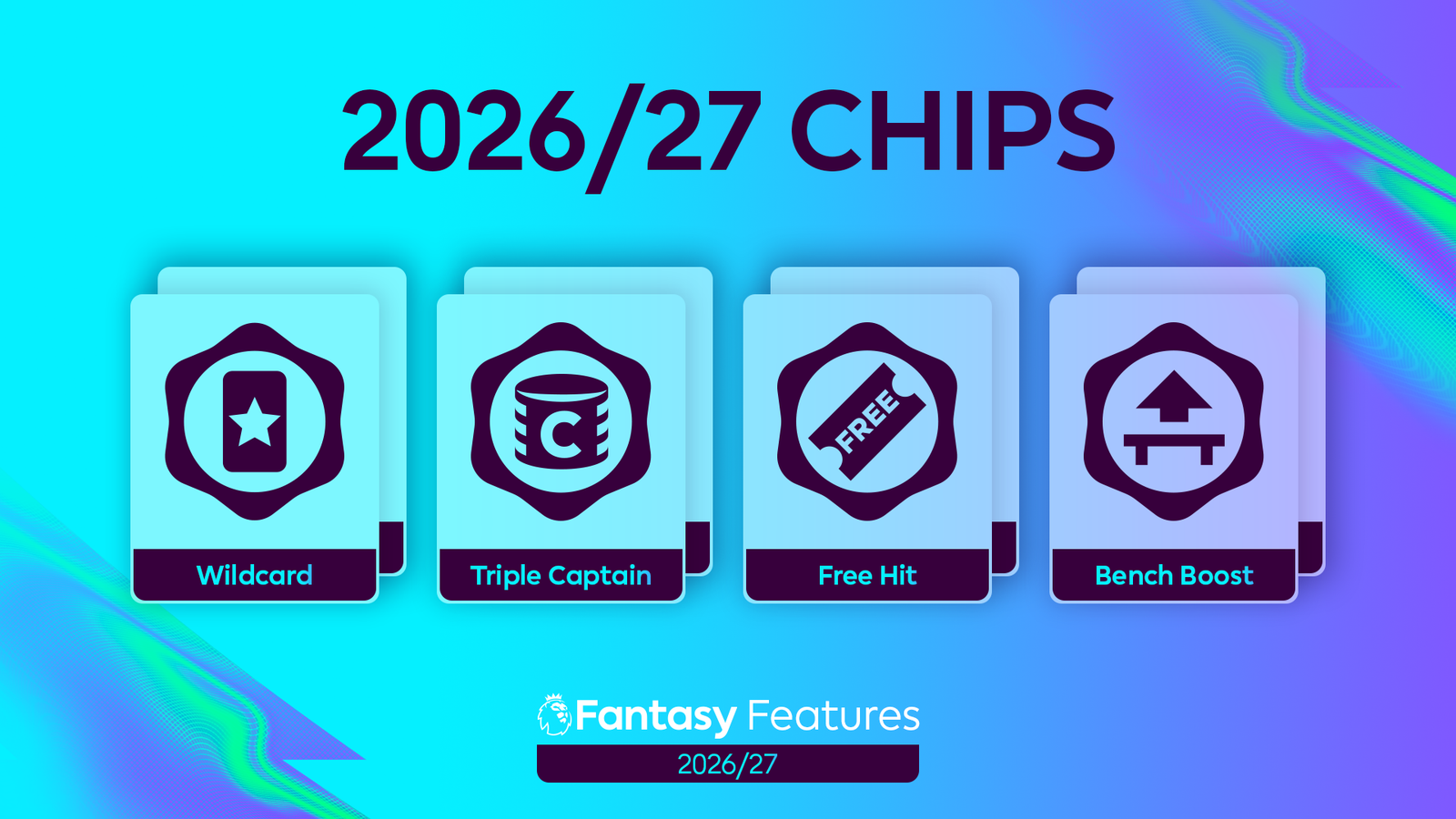
The 2026/27 season gives you two sets of chips:
- Two Wildcards
- Two Bench Boosts
- Two Free Hits
- Two Triple Captains
You must use your first set before the Gameweek 19 deadline. The first set cannot be carried into the second half of the season.
The same four chips then refresh for the rest of the campaign.
You can use only one chip in a Gameweek. This means you cannot Wildcard and Bench Boost in the same Gameweek.
The Premier League’s official FPL chip guide confirms the rules and the first-half deadline.
The important lesson is simple: do not leave every first-half chip unused while waiting for a perfect opportunity. That opportunity may not arrive.
1. Wildcard: rebuild your squad
The Wildcard gives you unlimited transfers for one Gameweek. The changes become permanent after the deadline.
This is different from a Free Hit. A Wildcard changes your long-term squad. A Free Hit only changes your team for one Gameweek.
When to Wildcard FPL managers should consider
The best time to Wildcard FPL teams depends on the condition of your squad. A common early window is around Gameweek 4 to Gameweek 6, when you have more information about:
- Starting line-ups
- New signings
- Player minutes
- Injuries
- Team tactics
- Fixture difficulty
- Early value picks
You may also need a Wildcard when several players have become problems at the same time.
For example, you might have:
- Two injured players
- A midfielder who has lost their starting place
- A forward facing a difficult fixture run
- A cheap player who is no longer getting minutes
- A team structure that makes it hard to buy the players you want
If you need four or more transfers to fix your squad, a Wildcard may be more useful than taking several points hits.
How to build an FPL Wildcard team
An FPL Wildcard team should not only target the next Gameweek. Look several weeks ahead.
Check whether your new players have:
- Secure starting places
- Good upcoming fixtures
- A clear attacking or defensive role
- A price that still gives you flexibility
- A realistic chance of returning points
Your FPL Wildcard draft should also leave room for future moves. Avoid filling the squad with players you will immediately want to sell.
A common mistake is using the Wildcard because one player scored a large number of points. One good Gameweek is not always enough evidence. Look at minutes, chances, role and fixtures before rebuilding.
You can use Metro Football’s Fixture Difficulty Ticker alongside your Wildcard planning. It helps you see which teams have favourable or difficult runs before you commit to several players from the same club.
2. Bench Boost: make your whole squad count
The Bench Boost adds the points from your four substitute players to your Gameweek total.
Without the chip, only your starting XI and captain count. With it, all 15 players can score for you.
What is the best time to Bench Boost FPL managers should look for?
The best time to Bench Boost FPL teams is usually when all 15 players have a realistic chance of playing and have useful fixtures.
That may be:
- Gameweek 1, when you can build a full squad from the start
- Gameweek 2, after seeing the first line-ups
- A Gameweek immediately after using your Wildcard
- A Double Gameweek, when some players have two fixtures
A Double Gameweek can look attractive because players have two chances to score. However, two fixtures do not always mean two starts. Rotation risk matters.
Before using Bench Boost, check:
- Do all four substitutes have a fixture?
- Are they likely to start?
- Are their fixtures reasonable?
- Do they have secure minutes?
- Are you spending too much of your budget on the bench?
An early Bench Boost can work well because you begin with unlimited transfers. You can select two playing goalkeepers and a full bench before the season develops.
The trade-off is that money spent on your bench cannot be used in your starting XI. If your substitutes are weak, saving the chip may be sensible.
Another option is to Wildcard first. You can then build a strong 15-player squad and use Bench Boost in the following Gameweek. Remember that you cannot activate both chips together.
3. Free Hit: solve one difficult Gameweek
The Free Hit gives you unlimited free transfers for one Gameweek. Your squad then returns to its previous state at the next deadline.
This makes it useful when you want players for one week but do not want to keep them afterwards.
When to use the Free Hit
The clearest use is a Blank Gameweek. A Blank Gameweek happens when several clubs do not have a fixture. Their players score zero points that week.
A Free Hit can help you create a full team without making permanent transfers.
You may also use it in a Double Gameweek when:
- You want several players from teams with two fixtures
- Those players have poor long-term fixtures
- You do not want to sell your current squad
- Your existing team cannot reach 11 strong starters
Your FPL Free Hit team should focus on the specific Gameweek. You do not need to worry as much about what happens afterwards because your original squad returns.
However, do not use the chip simply because your team has two or three weak fixtures. You can often manage that situation with normal transfers.
The Free Hit is unavailable in Gameweek 1. Also, if you use your first Free Hit in Gameweek 19, you cannot use the second Free Hit in Gameweek 20.
4. Triple Captain: choose one high-upside captain
The Triple Captain chip makes your captain’s points count three times instead of twice.
If your captain scores 10 points, the chip adds 30 points before bonus points and other calculations are considered. Without the chip, the captain would score 20 points.
A simple FPL Triple Captain strategy
The clearest FPL Triple Captain strategy is to choose a premium attacker with:
- A secure starting place
- Strong recent involvement
- Penalties or set pieces
- A good home fixture
- A high chance of playing 80 or more minutes
- One or two fixtures in the Gameweek
Double Gameweeks are popular for Triple Captain because the player has two opportunities to score. But they also bring more rotation risk.
A premium player in one excellent home fixture can be a better choice than a premium player with two difficult or uncertain matches.
Do not choose your Triple Captain based only on the number of fixtures. Check the opponent, expected minutes, team form and the player’s role.
You should also avoid committing too early. Injury news, rotation and fixture changes can alter the decision before the deadline.
A practical FPL chip planner for your season
You do not need to decide every chip date now. Instead, mark possible windows and review them each week.
A simple plan could look like this:
First half of the season
- Wildcard: Gameweek 4 to 6 if your squad needs a major reset
- Bench Boost: Gameweek 1, Gameweek 2 or soon after a Wildcard
- Free Hit: Save for a difficult Blank Gameweek or a short-term Double Gameweek
- Triple Captain: Use on a premium attacker in a standout fixture
Second half of the season
- Wildcard: Use around a major fixture change or before a strong Double Gameweek
- Bench Boost: Look for a Gameweek with 15 reliable players
- Free Hit: Consider a late Blank Gameweek when many teams do not play
- Triple Captain: Target the best remaining premium captain opportunity
Your FPL chip planner should remain flexible. The right decision will depend on your squad, available transfers, injuries and the final fixture schedule.
Common FPL chip mistakes
Using a chip to repair one small problem
One injured player usually does not justify a Wildcard or Free Hit. Try to solve small issues with a normal transfer.
Treating a Double Gameweek as automatically good
A player with two fixtures may still be rotated, suspended or facing strong opponents. Look at expected minutes and fixture quality.
Building a weak bench for Bench Boost
Four non-playing substitutes will not produce much. Check every player before using the chip.
Chasing last season’s chip dates
The best Gameweek for a chip changes each season. Fixture schedules, injuries and team form should guide you.
Waiting until the final deadline
The first set of chips expires after Gameweek 19. Leaving several chips unused can force you into a poor decision.
Copying another manager’s plan
Your rival may have a different squad, budget and transfer history. Use other plans as ideas, not instructions.
Let Metro Football organise your chip decisions
FPL chips are easier to manage when you can see the likely impact before the deadline.
Metro Football’s Chip Strategy Planner recommends when to use your Wildcard, Free Hit, Bench Boost and Triple Captain. It considers your squad and helps you compare possible Gameweeks.
You can also use our other FPL tools to support the decision:
- Rate My Team checks your squad structure and captain options.
- Transfer Planner compares expected points before and after a move.
- Fixture Difficulty Ticker shows favourable and difficult fixture runs.
- AI Transfers recommends a transfer based on your team.
- Mini League Tracker helps you follow the rivals you need to catch.
You can start with Metro Football’s free plan. Free access includes weekly reports and core FPL tools. When you are ready, Premium costs £4 per month, or £3.50 per month when billed yearly, and unlocks the Chip Strategy Planner and other personal team tools.
You do not need a perfect chip plan before the season begins. Start with the rules, identify possible windows and review your options before each deadline.
That gives you a clearer decision without feeling lost.
FPL chips explained: quick answers
How many FPL chips do you get in 2026/27?
You receive eight chips in total: two Wildcards, two Bench Boosts, two Free Hits and two Triple Captains.
Can you use two chips in one Gameweek?
No. Only one chip can be active in a Gameweek.
Can you use Free Hit in Gameweek 1?
No. The Free Hit cannot be played in Gameweek 1.
When should I use my Wildcard?
Use it when your squad needs several permanent changes. Gameweek 4 to 6 may be useful for some managers, but your team should decide the timing.
What is the best time to Bench Boost?
Use Bench Boost when all 15 players have a good chance of playing and have useful fixtures. This could be Gameweek 1, after a Wildcard or during a suitable Double Gameweek.
Is Triple Captain always best in a Double Gameweek?
No. A single strong fixture can be better than two difficult or uncertain fixtures. Focus on the player’s role, opponent and expected minutes.
Where can I plan my FPL chips?
Use the Metro Football Chip Strategy Planner to review your options based on your squad and the upcoming Gameweeks.