
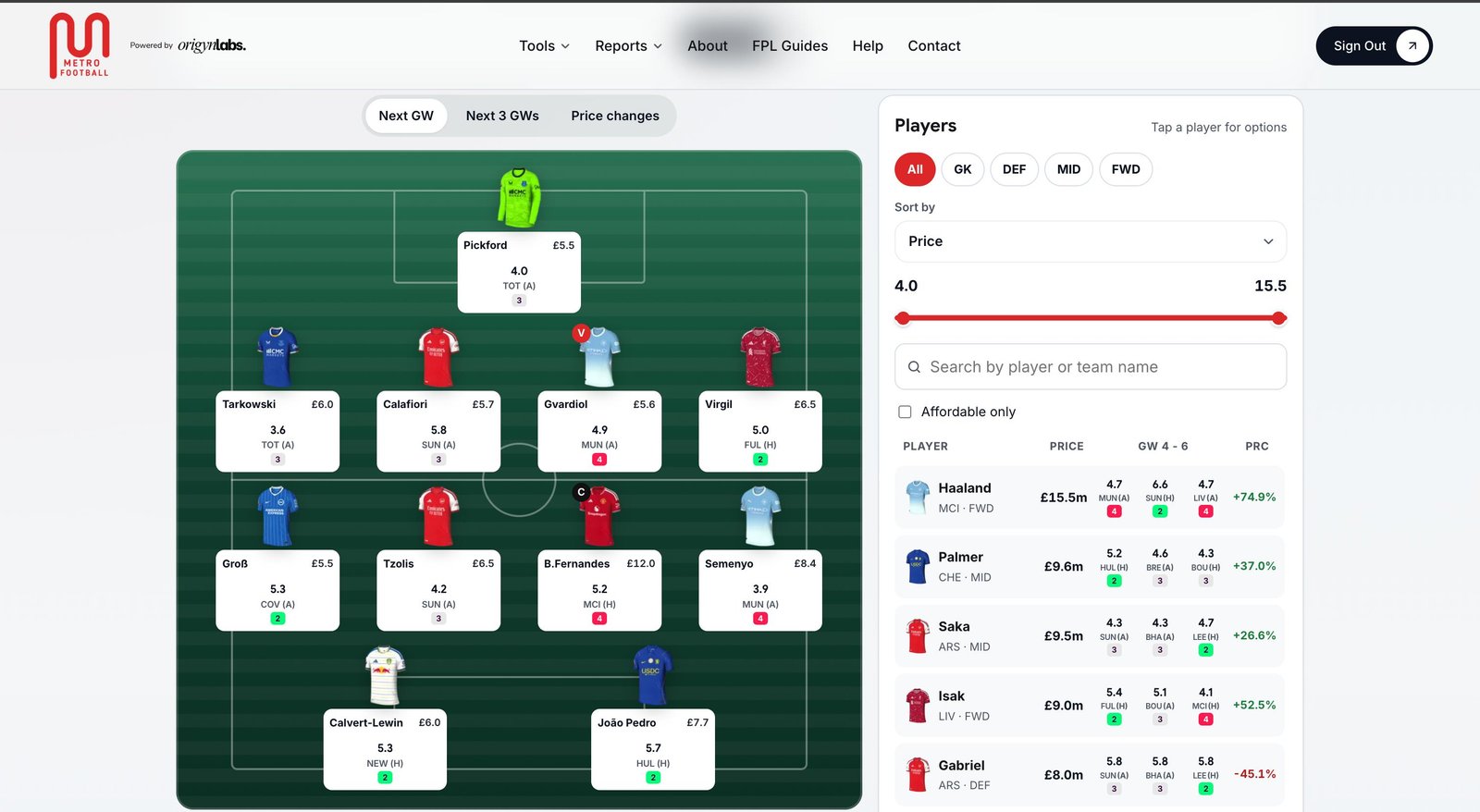
Every Gameweek brings the same question: who to transfer in FPL?
You may have an injured player, a difficult fixture run or a midfielder who has stopped starting. You may also see other managers bringing in a player after one big return.
That does not mean you need to make a rushed move.
The best FPL transfers usually come from a simple process. You check the problem, compare the options and test the expected points before you confirm anything.
This three-step plan can help you find the best FPL transfers this week while avoiding unnecessary -4 hits.
Step 1: Decide if you need a transfer
The first transfer decision is often whether to make a move at all.
You do not need to use a free transfer every Gameweek. If your team is fit, your players have reasonable fixtures and you can field a strong XI, rolling the transfer may be the better choice.
A saved transfer gives you more flexibility next week. It can also help you deal with an injury, suspension or fixture swing without taking a points hit.
Before searching for the best FPL transfer targets, check these questions:
- Can you field 11 players who are likely to start?
- Do you have a player who is injured, suspended or unlikely to play?
- Are several of your players entering a difficult fixture run?
- Is there a clear replacement with better fixtures and a secure starting place?
- Would you make the same move if the player had not scored heavily last week?
If your team has no urgent problem, you can roll the transfer and review your options again next Gameweek.
When a transfer is more useful
A transfer normally deserves more attention when it solves a clear problem.
You may need to sell a player who:
- Has picked up an injury.
- Has lost their starting place.
- Faces several difficult fixtures.
- Has become a rotation risk.
- No longer fits your squad structure or budget.
You can then look for a replacement with a good fixture run, regular minutes and a clear route to points.
Do not sell a reliable player only because they blanked once. One quiet Gameweek does not always change a good FPL asset.
Step 2: Compare the next three to five Gameweeks

The best FPL transfer is not always the player with the easiest fixture this weekend.
Try to look beyond one match. A player with a good run over the next three to five Gameweeks may offer more value than a short-term option who needs to be sold again soon.
This is where an FPL transfer planner can make the decision easier.
Metro Football’s Transfer Planner compares your expected points before and after a proposed transfer. You can test a move using your actual squad, budget and current team structure.
Instead of asking only, “Who should I buy this week?”, you can compare:
- Your current team with no transfer.
- Your team after one free transfer.
- Your team after a transfer that costs -4 points.
- Your expected points over several future Gameweeks.
- The budget and squad space available for future moves.
What to check in a replacement
When reviewing FPL transfer suggestions, look at more than recent points.
A useful replacement should ideally offer:
- Regular starts
A player cannot score points from the bench. Check whether they have a secure role and are likely to play. - A helpful fixture run
Look for several favourable matches rather than one attractive fixture. - A clear role in attack or defence
An attacking midfielder who takes set pieces may have more routes to points. A defender in a strong defensive team may offer clean sheets, assists and bonus points. - A price that fits your squad
The most expensive player is not always the best option. Good FPL budget transfers can help you improve two positions rather than spending everything on one name. - A reason to keep the player
You should have a plan to hold the player for several Gameweeks. Buying someone for one fixture can create another difficult decision next week.
Fixtures are only one part of the decision. Use them with minutes, role, form and price when deciding who to transfer FPL.
Step 3: Test the move before you confirm it
A transfer may look good in your head but produce a smaller gain when you compare the full team.
For example, bringing in a new midfielder may improve your starting XI. However, the move could leave you with a weak bench, remove money from another position or create a difficult transfer next week.
Use a transfer simulator to test the complete effect.
Metro Football’s Transfer Planner lets you compare your proposed squad with your current squad before you confirm the move. You can see whether the change improves your expected points and whether it works with your remaining budget.
This helps you avoid transfers based only on instinct.
A simple comparison
Suppose your current player is expected to score 4 points over the next three Gameweeks. Your proposed replacement is expected to score 12.
The difference is 8 points before considering any other factors. If the transfer is free, the move may be useful.
If the move costs -4, the practical gain becomes smaller:
- Expected points from the replacement: 12
- Expected points from the current player: 4
- Transfer cost: 4
- Estimated gain after the hit: 4 points
That may still be worthwhile if the new player has a better long-term outlook. But it is not automatically a good move.
The numbers are estimates, not guarantees. They help you compare the decision more clearly. They do not remove the uncertainty from FPL.
When should you take a -4 hit?
A -4 hit can be useful, but it should have a clear purpose.
It may be worth considering when:
- Your current player is injured, suspended or unlikely to play.
- You would otherwise start with fewer than 11 players.
- You are moving to a player with a much better fixture run.
- The new player has strong fixtures for several Gameweeks.
- You are preparing for a Double Gameweek.
- The transfer solves more than one squad problem.
It is usually harder to justify when:
- You are swapping between two similar players.
- You are chasing one recent haul.
- You are reacting to social media excitement.
- You can make the same move next week for free.
- Your current player still has good fixtures and secure minutes.
The key question is simple:
> Will this transfer gain more than four points compared with doing nothing?
You cannot know the exact answer before the matches are played. However, you can check whether the move has a strong enough reason to accept the cost.
If the answer feels uncertain, roll the transfer.
Use AI to find options for your specific team
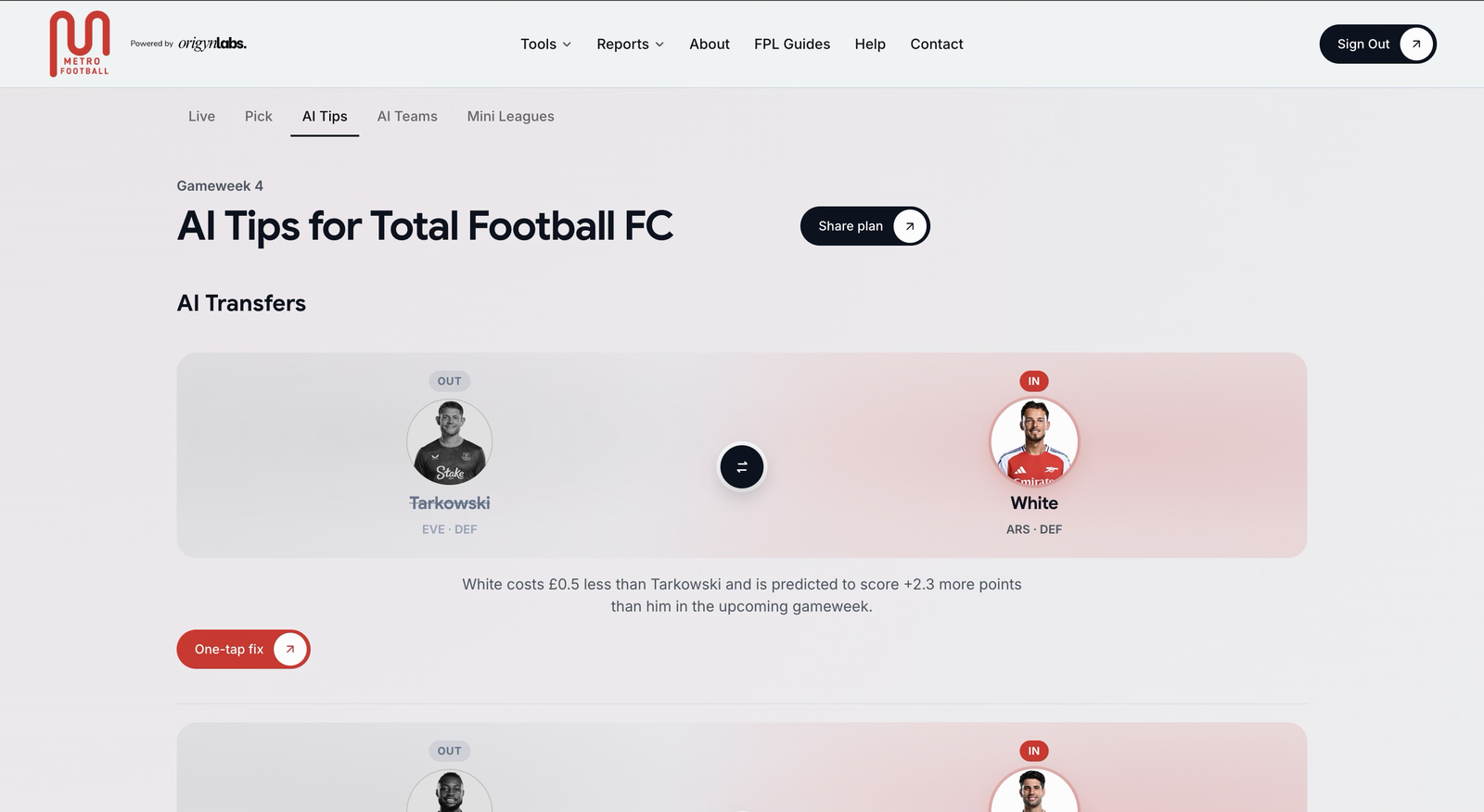
General lists of the best FPL transfers can be useful, but they do not always match your squad.
Your budget, formation, players owned and mini league position all affect the right decision.
Metro Football’s AI Transfers tool reviews your specific team and provides FPL AI transfer suggestions for the next Gameweek. It considers your squad rather than giving the same recommendation to every manager.
The tool can help you:
- Find a likely transfer out.
- Compare possible replacements.
- Identify a move that fits your budget.
- Review expected points before the deadline.
- Avoid spending time checking every player in the game.
AI advice is a guide, not a promise. You should still check late injury news, likely line-ups and any important deadline information before confirming your team.
Check your captain after making the transfer
Your new signing does not have to be your captain.
It is easy to feel positive about a player after bringing them into your squad. However, captaincy should still go to the player with the strongest combination of fixture, minutes and expected output.
Use Rate My Team to review your squad and compare captain options. You can also check the latest FPL Gameweek tips before the deadline.
For wider planning, the Fixture Difficulty Ticker shows upcoming fixture runs. This can help you decide whether a transfer is a short-term move or part of a longer plan.
A quick Gameweek transfer checklist
Use this checklist before you confirm any FPL transfers Gameweek by Gameweek:
- Identify the biggest problem in your squad.
- Check whether you can field 11 starters.
- Review the next three to five fixtures.
- Compare minutes, role, form and price.
- Look for a player you can hold for more than one week.
- Test the move in an FPL transfer simulator.
- Compare the move with rolling your transfer.
- Subtract four points if the transfer requires a hit.
- Check injuries and likely line-ups before the deadline.
- Review your captain separately.
This process works for casual managers who want to save time. It also helps competitive managers make decisions with less guesswork when a mini league is close.
Start with a free check
You do not need to research every player alone.
Start with Metro Football’s free tools and weekly FPL advice. You can review fixtures, reports and your wider Gameweek options before deciding whether you need more help.
When you are ready, try Metro Football free and link your FPL team. Premium adds personal tools such as Transfer Planner, AI Transfers, squad forecasts and transfer planning.
The Premium plan costs £4 per month, or £3.50 per month when billed yearly. If you do not win your mini league by the end of the season, Metro Football refunds what you paid for Premium that season, subject to the plan terms.
Check the answer first. Test the move. Then confirm your transfer when the numbers and the situation make sense.