

Nobody notices a defender when everything goes right. The offside trap works, the cross gets cleared, the striker never gets a clean look and the goalkeeper has a quiet afternoon. Then one mistake arrives, and suddenly everybody knows the defender’s name. That strange lack of applause is part of what makes defensive greatness so difficult to judge.
The Premier League began in 1992, and its greatest teams were built on strong foundations. Manchester United have won 13 titles, Manchester City eight, Chelsea five and Arsenal four, including their 2025/26 title that ended a 22-year wait. Blackburn Rovers, Leicester City and Liverpool have also lifted the trophy. Behind those champions stood players such as John Terry, Rio Ferdinand, Virgil van Dijk, Ashley Cole and Tony Adams.
Any list like this will start an argument, and that is part of the fun. I have mixed peak ability, longevity, leadership, influence, titles and big-match moments. A spectacular three-year peak can compete with a brilliant 15-year career, but it cannot completely erase the difference in durability. You may disagree with the order. You may even have a different player at number one. That is fair. Let’s get into it.
How I Judged Them (and Why Defenders Are the Hardest to Rank)
Ranking forwards often starts with goals. Defenders need a wider lens. Their best work can be a tackle that prevents a chance, a run that closes a passing lane or a piece of communication that stops danger before it forms.
What I counted
I considered four main areas: individual ability, sustained performance, influence on successful teams and memorable moments under pressure. Winning a title does not automatically make somebody a great defender, but repeatedly playing a major role in title-winning teams carries real weight.
I also considered how a player changed expectations in his position. Ashley Cole made one-versus-one defending from left-back look like a specialist art. Trent Alexander-Arnold changed what supporters expected from a full-back in possession. Van Dijk gave Liverpool a calmer, higher defensive line.
What I deliberately left out
I did not treat popularity as proof. Nor did I rank players simply by the number of medals in their collection. A squad player can win several titles without being one of the league’s defining defenders.
Clean sheets also need careful handling. They are partly a team measure. A defender in a dominant side will usually have more opportunities to record them than a defender constantly protecting a weaker team. The Premier League’s official statistics help establish the numbers, but they cannot tell the whole story.
The 20 Greatest Premier League Defenders at a Glance (Table 1)
| Rank | Player | Club(s) | Position | Key stat |
|---|---|---|---|---|
| 1 | John Terry | Chelsea | Centre-back | 214 clean sheets |
| 2 | Virgil van Dijk | Southampton, Liverpool | Centre-back | 123 clean sheets |
| 3 | Rio Ferdinand | West Ham, Leeds, Manchester United | Centre-back | Six Premier League titles |
| 4 | Ashley Cole | Arsenal, Chelsea | Left-back | Three league titles |
| 5 | Nemanja Vidic | Manchester United | Centre-back | Five Premier League titles |
| 6 | Tony Adams | Arsenal | Centre-back | Captain across three title-winning decades |
| 7 | Vincent Kompany | Manchester City | Centre-back | Four Premier League titles |
| 8 | Gary Neville | Manchester United | Right-back | Eight Premier League titles |
| 9 | Denis Irwin | Manchester United | Full-back | Seven league titles |
| 10 | Sol Campbell | Tottenham, Arsenal, Portsmouth | Centre-back | 504 Premier League appearances |
| 11 | Kyle Walker | Tottenham, Manchester City | Full-back | Six Premier League titles |
| 12 | Patrice Evra | Manchester United | Left-back | Five Premier League titles |
| 13 | Jaap Stam | Manchester United | Centre-back | Three Premier League titles |
| 14 | Branislav Ivanović | Chelsea | Centre-back, right-back | Three Premier League titles |
| 15 | Ricardo Carvalho | Chelsea | Centre-back | Three Premier League titles |
| 16 | Andy Robertson | Hull City, Liverpool | Left-back | One of the league’s most prolific assisting defenders |
| 17 | Trent Alexander-Arnold | Liverpool | Right-back | 64 assists, a defender’s record |
| 18 | César Azpilicueta | Chelsea | Full-back, centre-back | 508 Chelsea appearances across all competitions |
| 19 | Ledley King | Tottenham Hotspur | Centre-back | 323 Tottenham appearances across all competitions |
| 20 | Kolo Touré | Arsenal, Manchester City | Centre-back | Part of Arsenal’s unbeaten 2003/04 side |
How to read the table
The list is not a mathematical league table. The ranking combines measurable achievements with football judgement. That matters because some of the best defensive qualities do not sit neatly inside a statistics column.
The positions also reflect a player’s main Premier League role. Several players, including Ivanović, Azpilicueta and Walker, covered more than one position at a high level.
Why clean sheets flatter some defenders and punish others
A clean sheet tells you that a team did not concede. It does not tell you who made the decisive block, who protected the full-back or who played through an injury to keep the line together.
That is why Terry’s 214 clean sheets are hugely important, but not the only reason he tops the list. His leadership, consistency and central role in Chelsea’s success complete the argument.
1-4: The Cornerstones
These four defenders represent different versions of defensive excellence. Terry was the organiser, Van Dijk the modern transformer, Ferdinand the elegant reader and Cole the complete full-back.
John Terry: the most successful captain in Premier League history
Terry sits first because he combined almost everything you want from a Premier League centre-back. He was strong in the air, aggressive in the tackle, dependable in big matches and comfortable taking responsibility when Chelsea needed an equaliser.
He made 492 Premier League appearances, all for Chelsea, and contributed to a record 214 clean sheets by a defender. He also won five Premier League titles. More importantly, he was the captain at the heart of Chelsea’s identity for years. As Sky Sports has often reflected through its coverage of Chelsea’s title-winning teams, Terry was not simply part of the defence. He directed it.
The numbers behind the record
Five titles and 214 clean sheets make the statistical case persuasive. His real advantage, though, was how often he looked like the person responsible for keeping the whole structure together.
Virgil van Dijk: the defender who rebuilt Liverpool
Van Dijk changed Liverpool’s defensive level almost immediately. His speed, strength and calmness allowed the team to defend higher and attack with greater confidence. He could win the first duel, cover space behind him and start an attack with one pass.
He has made 274 Premier League appearances for Liverpool and recorded 123 clean sheets. He won the title in 2019/20 and again in 2024/25. His peak was so powerful that it pushed him into the conversation with defenders who had played twice as long. Sports Illustrated makes a similar case, saying, "Van Dijk’s influence was not just statistical; he changed what Liverpool could safely attempt."
Rio Ferdinand: elegance at the back
Ferdinand defended with his head as much as his body. He read danger early, stepped into midfield with the ball and rarely looked hurried. That calmness was especially valuable at Manchester United, where the defensive line often had to cover large spaces.
He made 312 Premier League appearances for United and won six titles. His partnership with Nemanja Vidic became one of the league’s great centre-back pairings because the two players balanced each other so well. Ferdinand had the silk; Vidic brought the steel.
Ashley Cole: the greatest full-back the league has seen
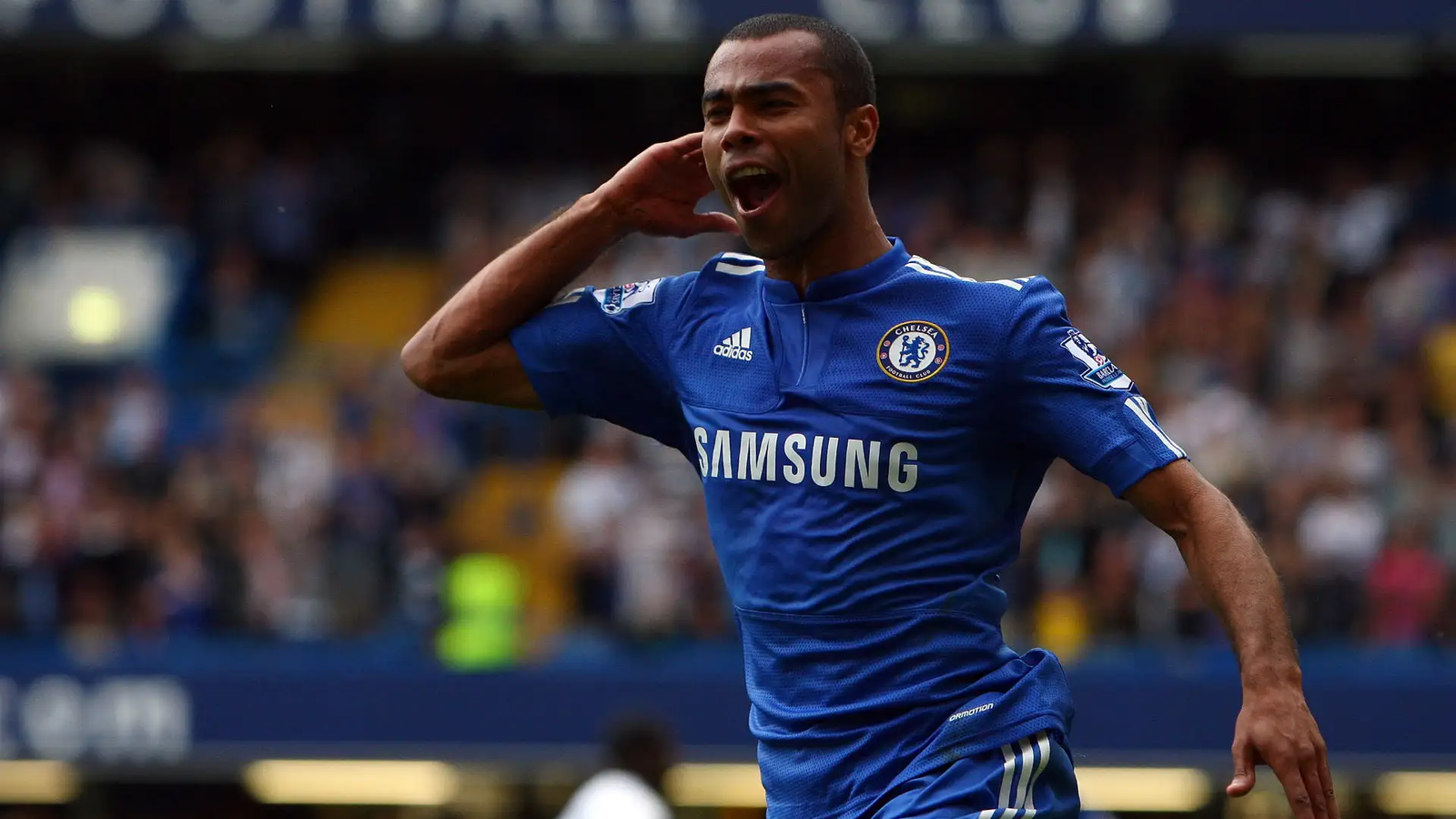
Cole’s case is built on one difficult question: which Premier League full-back would you trust most against an elite winger? For many supporters, the answer is Cole. He could defend one-versus-one, recover quickly and contribute without needing protection from a midfielder.
He made 385 Premier League appearances and won three league titles with Arsenal and Chelsea. His move between the two clubs created controversy, but it did not weaken his footballing case. FourFourTwo and similar rankings regularly place him among the league’s defensive elite.
5-8: The Enforcers
The next group brought force, leadership and reliability. They did not all defend in the same way, but opponents knew they would face a serious physical and mental test.
Nemanja Vidic: fear, delivered weekly
Vidic made defending feel personal. He attacked crosses, contested headers and treated every duel as if the match depended on it. At Manchester United, it often did.
He made 211 Premier League appearances and won five titles. His partnership with Ferdinand worked because his aggression had structure. He was not simply charging into challenges. He understood when to step forward and when to let Ferdinand cover.
Tony Adams: the captain of three decades
Adams was Arsenal’s defensive reference point for 14 years, from 1988 until his retirement in 2002. He made 255 Premier League appearances and remains the only player to captain a side to top-flight league titles in three different decades.
His Arsenal career began before the Premier League, but that should not reduce his standing. He captained the club to Premier League titles in 1998 and 2002 after leading earlier First Division successes in 1989 and 1991. His authority gave Arsenal a defensive identity.
Vincent Kompany: the leader of the 100-point era
Kompany combined leadership with the ability to produce defining moments. His long-range goal against Leicester City in 2019 remains one of the clearest examples of a captain changing a title race, but his defending was the foundation of his reputation.
He made 265 Premier League appearances for Manchester City and won four titles: 2011/12, 2013/14, 2017/18 and 2018/19. He was central to City’s transition from ambitious challenger to dominant champion.
Gary Neville: the most decorated right-back
Neville did not rely on spectacular tricks. He positioned himself correctly, communicated constantly and understood the demands of playing in a team that attacked relentlessly.
His 399 Premier League appearances and eight titles underline his consistency. He was also an important part of Manchester United’s dressing room. A right-back who could be trusted in almost every situation is more valuable than one who looks brilliant only when the game follows his preferred script.
9-12: Full-Backs and Quiet Giants
This group shows that defensive greatness does not always arrive with a loud personality. Irwin and Evra were dependable title winners, while Campbell and Walker offered unusual physical tools.
Denis Irwin: the most underrated great
Irwin was comfortable on either side, reliable from set pieces and rarely caught out of position. He made 328 Premier League appearances and won seven league titles with Manchester United.
His lack of drama has probably worked against him in public debates. Yet that was his gift. Irwin made difficult actions look routine. He was the type of player managers trusted because his floor was exceptionally high.
Sol Campbell: power and pace
Campbell combined the size to handle a traditional target man with the pace to defend space behind him. He made 504 Premier League appearances and won two titles with Arsenal in 2001/02 and 2003/04.
He also captained Portsmouth to the 2008 FA Cup. His best Arsenal moment came in a team that went through the entire 2003/04 Premier League season unbeaten. Campbell was not a passenger in that side. He was one of its defensive pillars.
Kyle Walker: the modern recovery defender
Walker’s greatest defensive weapon is still his recovery speed. When a high line breaks, he can turn a dangerous situation into a manageable one within seconds. That ability has helped Manchester City control games with an aggressive defensive shape.
He has made 446 Premier League appearances and won six titles. The role has changed over time, but the underlying value remains the same: Walker gives his team permission to take risks because he can often repair the damage.
Patrice Evra: the left-back of a dynasty
Evra brought energy, character and consistency to Manchester United’s left side. He made 278 Premier League appearances and won five titles.
His importance went beyond overlaps. He defended with intensity, supported attacks and fitted into a side where every player had to understand several phases of the game. He was one of the reliable pieces that helped United remain competitive across many seasons.
13-16: Short Peaks and Long Careers
Not every defender has the same type of legacy. Stam and Carvalho reached extraordinary levels over shorter Premier League periods, while Ivanović and Robertson built cases through durability and repeated high-level performances.
Jaap Stam: three years, total dominance
Stam’s Premier League spell at Manchester United was relatively short, but his physical presence and reading of the game made an immediate impression. He won three Premier League titles with the club.
His verified figure of 127 appearances is across all competitions, not just the Premier League. That distinction matters. Still, the length of a career should not completely erase the quality of a peak. Stam looked like the ideal defender for United’s most demanding matches.
Branislav Ivanović: the big-game defender
Ivanović was an excellent example of a player whose value grew when matches became uncomfortable. He could play at centre-back or right-back, defend set pieces and contribute important goals.
He made 274 Premier League appearances and won three titles with Chelsea: 2009/10, 2014/15 and 2016/17. His versatility gave managers options without sacrificing physical strength.
Ricardo Carvalho: the quiet partner
Carvalho’s defending was based on anticipation rather than constant confrontation. He read the striker’s movement early and used his positioning to make challenges look simpler than they were.
He made 135 Premier League appearances for Chelsea and won three titles. His peak came alongside John Terry, where his calmness balanced Terry’s directness. That partnership helped form the base of Chelsea’s first great Premier League era.
Andy Robertson: the modern attacking full-back
Robertson’s influence comes from relentless movement. He can defend deep, press high and deliver from wide areas. Along with Trent Alexander-Arnold, he is one of the two most prolific assisting defenders in Premier League history.
He has made 275 appearances for Liverpool and won two titles, in 2019/20 and 2024/25. His ranking reflects the complete role of the modern full-back: defending is still the first duty, but starting and supporting attacks now matter much more.
17-20: Assist Machines and Forgotten Men
The final four bring different qualities. Alexander-Arnold has changed the passing expectations of a full-back, while Azpilicueta offered versatility. King’s ability was limited by injury, and Touré deserves recognition as part of one of the league’s most famous defences.
Trent Alexander-Arnold: the passing defender
Alexander-Arnold has made 259 Premier League appearances and recorded 64 assists, the record for a defender. Those numbers do not tell the whole story, but they show the scale of his creative impact.
His long passing can change the direction of a match in one action. The debate around his defending is fair, but it should not hide how significantly he has expanded the position. He won the Premier League title with Liverpool in 2019/20.
César Azpilicueta: the man who played everywhere
Azpilicueta built his Chelsea career on trust. He could play full-back, centre-back or in a back three, and managers knew he would understand the assignment.
He made 508 appearances for Chelsea across all competitions and won two Premier League titles. His value was especially clear during periods of tactical change. He was not always the most gifted player on the pitch, but he was often one of the safest choices.
Ledley King: the talent that deserved better luck
King had the qualities of an elite centre-back: composure, timing, pace and excellent reading of the game. Persistent injury problems limited his training and availability, which is widely credited with masking just how good he could have been.
He made 323 appearances for Tottenham across all competitions. His ranking is therefore a judgement about peak ability rather than career volume. Had his body allowed greater continuity, he might have climbed considerably higher.
Kolo Touré: the unbeaten season’s other centre-back
Touré partnered Sol Campbell in Arsenal’s unbeaten 2003/04 Premier League season. That alone gives him a powerful place in league history, but his career did not end there.
He later won the title with Manchester City in 2011/12, giving him two Premier League medals with different clubs. His pace, athleticism and willingness to defend large spaces made him a strong fit for Arsenal’s adventurous style.
Rank
| Rank | Player | Position | Premier League appearances | Premier League titles | Clean sheets |
|---|---|---|---|---|---|
| 1 | John Terry | Centre-back | 492 | 5 | 214 |
| 2 | Virgil van Dijk | Centre-back | 274 | 2 | 123 |
| 3 | Rio Ferdinand | Centre-back | 312 | 6 | 132 |
| 4 | Ashley Cole | Left-back | 385 | 3 | 132 |
| 5 | Nemanja Vidic | Centre-back | 211 | 5 | 90 |
| 6 | Tony Adams | Centre-back | 255 | 2 | 90 |
| 7 | Vincent Kompany | Centre-back | 265 | 4 | 95 |
| 8 | Gary Neville | Right-back | 399 | 8 | 151 |
| 9 | Denis Irwin | Full-back | 328 | 7 | 151 |
| 10 | Sol Campbell | Centre-back | 504 | 2 | 149 |
| 11 | Kyle Walker | Full-back | 446 | 6 | 150 |
| 12 | Patrice Evra | Left-back | 278 | 5 | 151 |
| 13 | Jaap Stam | Centre-back | 287 | 3 | 104 |
| 14 | Branislav Ivanović | Centre-back, right-back | 274 | 3 | 104 |
| 15 | Ricardo Carvalho | Centre-back | 135 | 3 | 52 |
| 16 | Andy Robertson | Left-back | 275 | 2 | 90 |
| 17 | Trent Alexander-Arnold | Right-back | 259 | 1 | 50 |
| 18 | César Azpilicueta | Full-back, centre-back | 335 | 2 | 150 |
| 19 | Ledley King | Centre-back | 268 | 0 | 90 |
| 20 | Kolo Touré | Centre-back | 265 | 2 | 90 |
What the second table shows
The table supports the broad shape of the ranking. Terry and Van Dijk have the strongest verified clean-sheet figures supplied here. Neville and Irwin show how sustained success can build a powerful case, while Alexander-Arnold’s assist record highlights the attacking value of modern full-backs.
A dash does not mean a player failed to achieve something. It means the specific figure was not included among the verified statistics used for this article, or the available number referred to all competitions rather than the Premier League alone.
How to argue about it properly
The strongest disagreement will probably involve Terry, Van Dijk, Ferdinand and Cole. That is sensible. Their cases rest on different evidence.
Terry has the longevity and captaincy. Van Dijk has the transformational peak. Ferdinand has the elegance and consistency. Cole has the strongest full-back case. A different order can still be a well-reasoned one.
The Honourable Mentions
Unlucky to miss out
Jamie Carragher, Gary Pallister, John Stones, Sami Hyypiä, Gary Cahill and Rúben Dias all have credible cases. Carragher’s leadership and positional intelligence deserve particular respect, while Pallister was a major part of Manchester United’s early Premier League success.
Players such as Steve Bruce, Martin Keown and Sami Hyypiä also remind us how competitive the central-defender debate remains.
The current generation knocking on the door
Dias, Stones, William Saliba and other current defenders may move into the conversation with more seasons at the top. The difficulty is judging an unfinished career.
A player can look destined for greatness and still lose form, move clubs or suffer injuries. That is why current ability should be praised without handing out a final legacy too early.
Centre-Backs versus Full-Backs: Is This One List Fair?
Why the roles are almost different sports
Centre-backs spend more time protecting the penalty area, controlling aerial battles and organising the defensive line. Full-backs must defend wide spaces, support attacks and often sprint from one end of the pitch to the other.
Comparing them directly is like comparing a goalkeeper with a holding midfielder. Both are essential, but their best actions happen in different places.
How I tried to balance it
I judged players against the demands of their own role. Cole does not need to match Terry’s aerial numbers to rank highly. Alexander-Arnold does not need to defend exactly like Vidic to deserve recognition.
The question is not simply, “Who made the most tackles?” It is, “How much did this player improve his team while doing his job at the highest level?”
How the 2026/27 Season Changes the Debate
Van Dijk’s continued case
Van Dijk remains one of the clearest examples of a defender whose peak changed a club’s possibilities. His case will become even stronger if he continues performing at a high level, but his existing Liverpool legacy is already substantial.
He does not need to win every remaining honour to justify his place near the top. The transformation he brought to Liverpool is already part of Premier League history.
Where the current crop fits
The current generation has more tactical variety to handle. Defenders are expected to build attacks, defend large spaces and adjust between formations during the same match.
That may produce a new kind of all-time great. For now, the players still developing their careers should be judged on what they have achieved, not on predictions.
Final Thoughts
The greatest Premier League defenders were not all built from the same materials. Terry used authority, Ferdinand used intelligence, Cole used timing, Van Dijk used control and Kompany used leadership. The common thread was not a particular style; it was the ability to make a team better, calmer and harder to beat.
Terry takes the top spot because he combined elite defending, longevity, captaincy and five titles. But the gap between the leading names is not enormous. A convincing argument can move several players around. That is what makes ranking defenders so difficult, and so enjoyable.
FAQs
Who is the greatest Premier League defender ever?
John Terry is the choice at number one here. His 492 appearances, record 214 clean sheets, five titles and long captaincy at Chelsea give him the strongest overall case.
Which defender has the most Premier League clean sheets?
John Terry holds the record for the most clean sheets by a defender in Premier League history, with 214. Clean sheets are team achievements as well as individual markers, but that remains an exceptional figure.
Who has won the most Premier League titles as a defender?
Gary Neville won eight Premier League titles with Manchester United. Denis Irwin won seven, while Rio Ferdinand won six.
Was Ashley Cole the best Premier League full-back?
Many supporters would say yes. Cole made 385 appearances, won three league titles and consistently handled the league’s best wingers in one-versus-one situations.
Is Virgil van Dijk better than John Terry?
It depends on what you value. Van Dijk’s peak and effect on Liverpool are extraordinary, while Terry has the stronger longevity, captaincy and trophy record. This ranking places Terry first, but Van Dijk has a legitimate alternative case.
Who was the best defender in Arsenal’s Invincibles side?
Sol Campbell and Kolo Touré formed the central-defensive partnership, with Campbell generally receiving more individual recognition. Touré’s pace and athleticism were also essential to Arsenal’s ability to defend space.
Which Premier League defender has the most assists?
Trent Alexander-Arnold holds the record for assists by a defender, with 64. His delivery and passing have changed how many supporters view the full-back position.
Who was Tony Adams?
Tony Adams was Arsenal’s long-serving captain and one of the defining defenders of the early Premier League era. He captained top-flight title-winning sides across three different decades and made 255 Premier League appearances for Arsenal.
Why is Jaap Stam ranked so highly despite a shorter Premier League spell?
Stam’s Premier League peak was outstanding. He won three titles with Manchester United and combined strength, pace and positioning. His shorter spell means he cannot match the longevity of Terry or Neville, but his best performances were good enough to place him in the top 20.